Earthquakes are a low-risk but real hazard for the Maldives. Learn how the country's geography shapes its seismic exposure, which atolls are most susceptible, and what to do if you feel a tremor.
What is an Earthquake?
An earthquake is a term used to describe both a sudden slip on a fault and the resulting ground shaking and radiated seismic energy caused by that slip, or by volcanic or magmatic activity, or other sudden stress changes in the Earth. Earthquakes range from imperceptible micro-tremors to catastrophic events capable of destroying infrastructure and triggering secondary hazards such as tsunamis.
Seismic Risk to the Maldives
The geographic location of the Maldives shields it from any direct, major tectonic activity. This makes earthquakes both infrequent and minor in the context of the Maldives. The country sits away from the major subduction zones that drive the most damaging seismic events in the Indian Ocean region.
Maldives is not entirely removed from seismic influence. Weak tremors originating from fault lines in the surrounding region have been recorded over the decades and the southern atolls are most exposed to their effects.
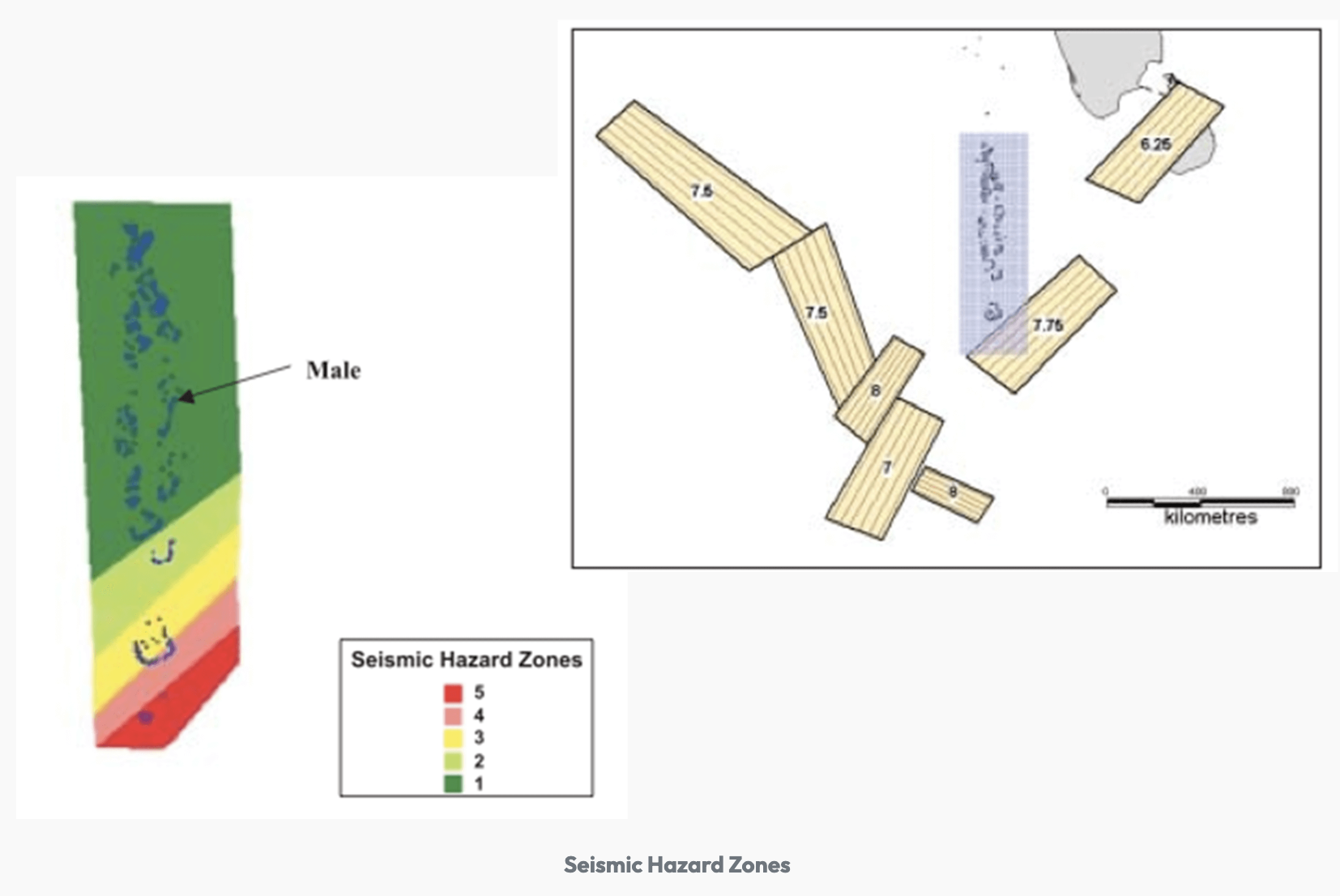
Since 1944, only three earthquakes of magnitude 7.0 or above have been recorded regionally. The most recent was a 7.6 magnitude earthquake in 2003 on the Carlsberg Ridge, approximately 444 km south of Addu Atoll. Residents of Addu felt the tremors, and minor structural damage to some properties was reported. No major damage or casualties have been recorded anywhere in the Maldives from an earthquake to date.
Where the Risk Originate
The Maldives sits within reach of three fault systems that could generate seismic activity felt across the archipelago:
Seismic Hazard Zones in the Maldives | Source: NDMA
What an Earthquake Could Mean for Maldives
The risk of a damaging earthquake directly affecting the Maldives is low. However, in the unlikely event of a significant seismic event, particularly a magnitude 7.0 or above on the Carlsberg Ridge the southern atolls could experience noticeable ground shaking, with potential for:
Damage to vulnerable or poorly constructed structures
Disruption to essential services and infrastructure
Financial costs for repairs and reconstruction
Psychological stress among affected communities
Secondary hazards — most critically, a tsunami if the earthquake occurs undersea and meets the conditions necessary to generate one
The flat, low-lying nature of Maldivian islands means there is no elevated ground to retreat to in the event of earthquake-triggered coastal hazards. This makes awareness and the link between earthquake preparedness and tsunami preparedness , especially important for communities in the southern atolls.
What to Do If You Feel a Tremor
Earthquakes in the Maldives are rare and usually minor. But knowing how to respond in the moment and in the minutes after can make a significant difference.
✓
Drop, Cover, Hold If you feel shaking, immediately drop to your hands and knees, take cover under a sturdy table or against an interior wall away from windows, and hold on until the shaking stops. Do not run outside during shaking, falling debris is the primary cause of injury.
Move Away from Windows and Heavy Objects Stay away from windows, glass, and anything that could fall. If you are outdoors, move away from buildings, trees, and power lines and drop to the ground.
Be Aware of Tsunami Risk A significant undersea earthquake particularly one felt strongly or for a long time may generate a tsunami. Check updates from MMS and NDMA and stay aware!
✓
Stay Informed After the Shaking Stops Check updates from MMS and NDMA alerts immediately after any tremor. Aftershocks can follow. Do not re-enter damaged buildings. Report any structural damage to your island council.
✓
Report What You Felt Even minor tremors are valuable data. If you feel shaking, report it to your island council or the Maldives Meteorological Service. Community reports help build the national picture of seismic activity across the archipelago.
The Maldives has two seismometers connected to the Seiscomp3 global network, providing continuous surveillance and monitoring of seismic activity. Early warning coordination is maintained through Indian Ocean regional collaboration systems. While no dedicated earthquake legislation or policy currently exists, monitoring capacity is considered adequate for the current level of risk