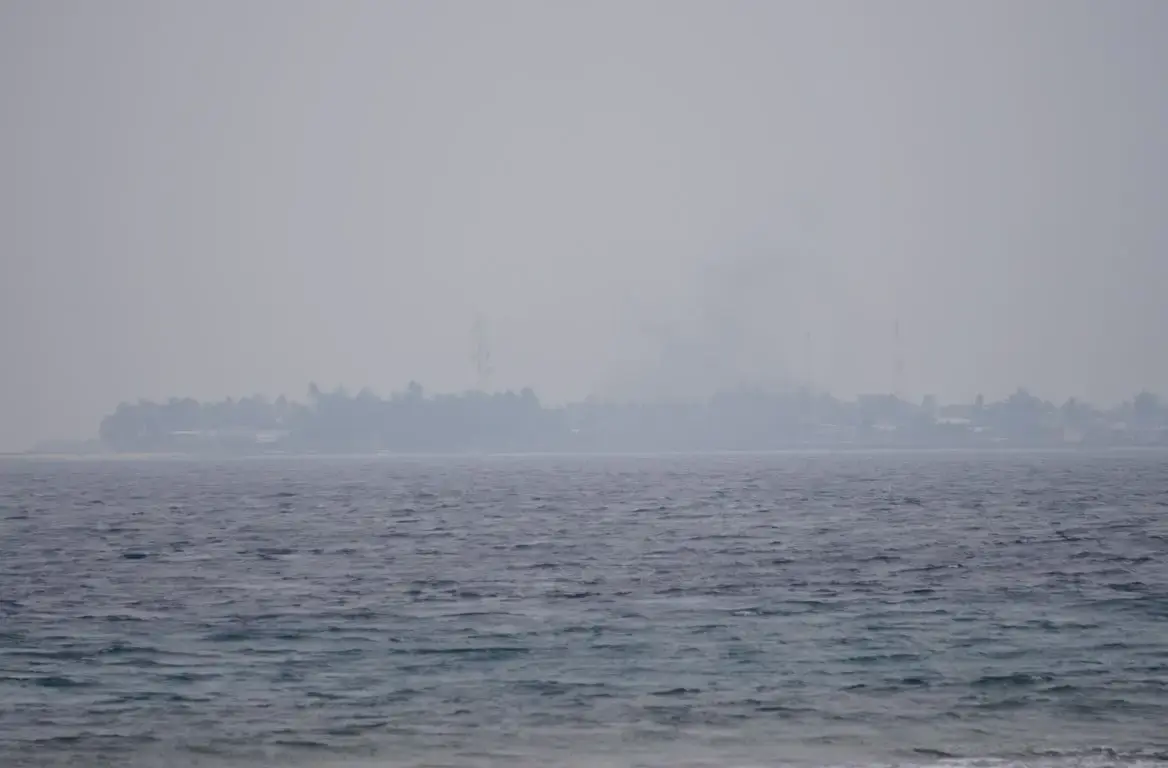
What is haze?
Haze is caused by fine particulate matter and air pollutants remaining suspended in the atmosphere for extended periods. Unlike fog, which is caused by moisture, haze is primarily associated with smoke, dust, and pollution. These particles reduce visibility and degrade air quality, making the air unhealthy to breathe, particularly for vulnerable groups.
How does haze occur in the Maldives?
Haze in the Maldives is largely influenced by regional and transboundary factors, rather than local emission sources. It commonly occurs when smoke and pollutants from large-scale vegetation fires, agricultural burning, or industrial activity in the wider region are transported over long distances by prevailing winds.
Haze events are more likely during:
Periods of stable atmospheric conditions
Certain monsoon phases that influence wind direction
Extended dry periods, when pollutants remain suspended in the air
Due to the Maldives’ open geography and dependence on regional wind circulation, haze can cover wide areas of the country at once, sometimes persisting for several days before dispersing.
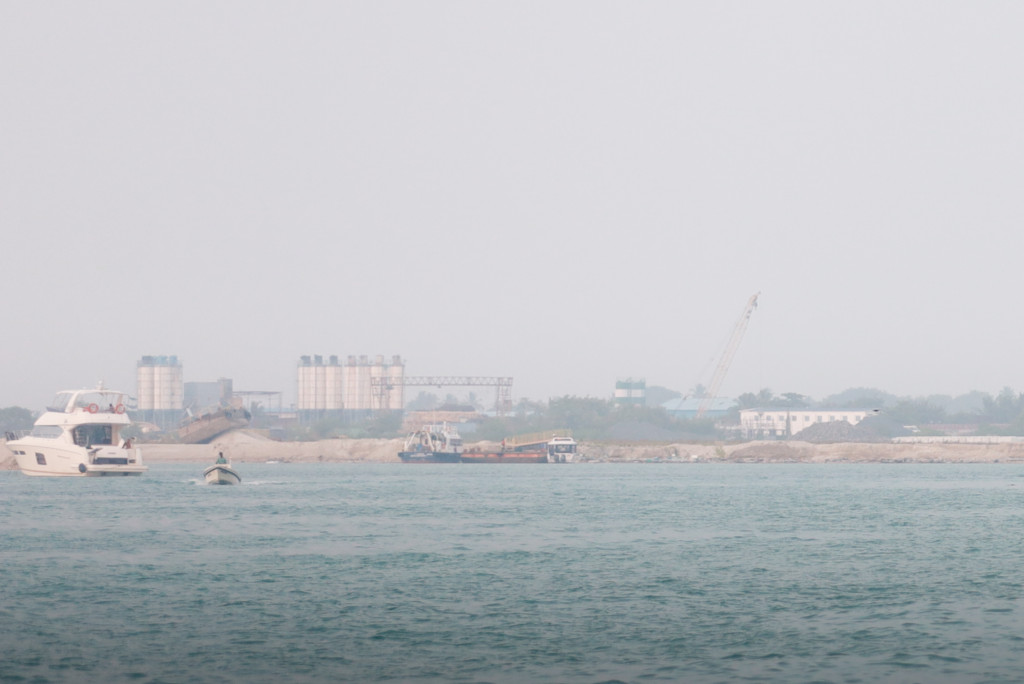
Impacts of haze in the Maldives
Haze can affect large areas at the same time and may persist for several days, leading to cumulative impacts on health, transport, and daily life. While it does not usually cause physical damage to buildings, reduced air quality and visibility can disrupt essential services and place increased strain on communities and health systems.
Air quality information and monitoring in the Maldives
Air quality management in the Maldives is led by the Ministry of Climate Change, Environment and Energy. The Ministry is responsible for national air quality policy, monitoring, and reporting, including the assessment of pollutants such as PM₂.₅ (fine particulate matter) that are closely linked to haze.
Read the Maldives Air quality report 2024 - Here
Air quality in the Maldives is generally good for most of the year. However, seasonal declines are observed during the northeast monsoon (Iruvai), particularly between December and March. During this period:
Regional wind patterns may transport air pollutants from outside the Maldives
Dry and stable atmospheric conditions can allow haze to persist
Urban areas such as Malé City may experience higher pollution levels
Learn about haze advisories in the Maldives
Air quality information related to haze in the Maldives is primarily communicated through weather updates, advisories, and public notices, rather than through a dedicated national air quality index system.
The Maldives Meteorological Service plays a key role in monitoring atmospheric conditions and issuing advisories when regional weather patterns and wind conditions may contribute to haze or reduced visibility. These advisories are often linked to broader weather systems, including dry periods and changes in monsoon wind direction.
During haze events, health-related guidance may also be issued by relevant authorities such as Health Protection Agency, advising the public to limit outdoor exposure and take precautions, particularly for vulnerable groups such as children, older persons, and individuals with respiratory conditions.
Because haze affecting the Maldives is often influenced by regional and transboundary pollution, local air quality conditions may change depending on wind patterns and atmospheric stability. As a result, official advisories and updates remain the most reliable source of information for the public.
Preparedness actions during haze events
While haze cannot be prevented at the local level, its impacts can be reduced through early awareness and protective actions, particularly during periods of poor air quality. Preparedness actions focused on health protection help reduce cumulative impacts and support community wellbeing during periods of reduced air quality.
These actions focus on reducing exposure, which is the most effective way to limit health impacts during haze.
Reducing risk through awareness and preparedness
Haze is a environmental and public health risk in the Maldives, often driven by seasonal weather patterns and regional pollution. While haze events may not cause visible damage to buildings or infrastructure, they can have serious cumulative effects on health and wellbeing if precautions are not taken.
By staying informed, limiting exposure, and taking practical protective actions, individuals and communities can reduce health risks and maintain daily routines more safely. Preparedness and early action play a key role in protecting health and strengthening resilience during periods of reduced air quality.