What is heavy rainfall?
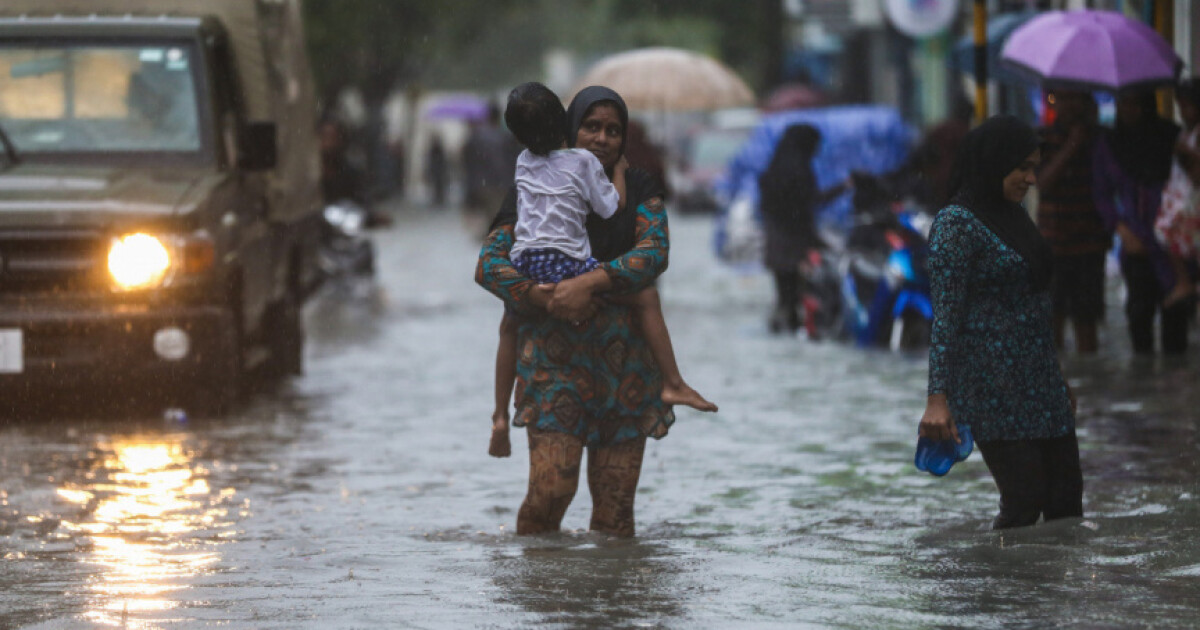
Heavy rainfall refers to intense rain over a short period of time. In the Maldives, heavy rain can build quickly, especially during unsettled weather and monsoon seasons. Even when rain does not last long, the amount of water falling in a short time can exceed the capacity of roads, drains, and low-lying areas—leading to flooding and disruption.
How does heavy rainfall occur in the Maldives?
Heavy rainfall in the Maldives is commonly linked to:
Active monsoon conditions and shifting weather patterns
Passing rain clouds and thunderstorm systems
Tropical disturbances that enhance rainfall even without cyclone formation
Because many islands are low-lying and have limited natural drainage, heavy rainfall can quickly result in standing water, flooding of roads and household compounds, and pressure on sewerage and drainage systems.
Observations and alerting levels
In the Maldives, heavy rainfall and flood risk are monitored and communicated through an alert system issued by the Maldives Meteorological Service. Rather than relying on technical rainfall measurements alone, rainfall conditions are translated into colour-coded alert levels to help the public quickly understand the severity of rainfall and the likelihood of flooding.
These alert levels are based on:
Observed rainfall amounts over recent hours
Short-term rainfall forecast
As rainfall intensity and accumulation increase, alert levels change to reflect greater risk to safety, property, and daily activities. Higher alert levels indicate heavier rainfall over shorter periods and a higher likelihood of surface flooding and disruption.
The following alert levels are used to describe heavy rain and flood conditions in the Maldives:
50 mm in 1 hour, or 80 mm in 6 hours or forecasts meeting these conditions
70 mm in 1 hour, or 100 mm in 6 hours or forecasts meeting these conditions
90 mm in 1 hour, or 120 mm in 6 hours or forecasts meeting these conditions
180 mm in 6 hours or forecasts meeting these conditions
What impacts can heavy rainfall cause?
Heavy rainfall can create widespread impacts in island settings, including:
Surface water flooding in roads, housing compounds, and low-lying areas
Overwhelmed drains and water backing up in streets and public spaces
Damage to household items and disruption to daily routines
Unsafe road conditions and reduced visibility, increasing accident risk
Disruption to ferry schedules and movement between islands (especially when combined with rough seas)
Increased public health concerns where floodwater mixes with waste or sewerage overflow
Because islands are compact, heavy rainfall impacts can quickly affect movement, services, and livelihoods across the community.
Warning signs and weather updates
Heavy rainfall often builds quickly, but warning signs may include:
Darkening clouds and rapidly increasing rainfall intensity
Thunderstorm activity and reduced visibility
Persistent rain causing rise of water levels in roads, house compoands
Weather updates and alerts issued by Maldives Meteorological Services should be monitored closely during monsoon seasons and periods of unstable weather
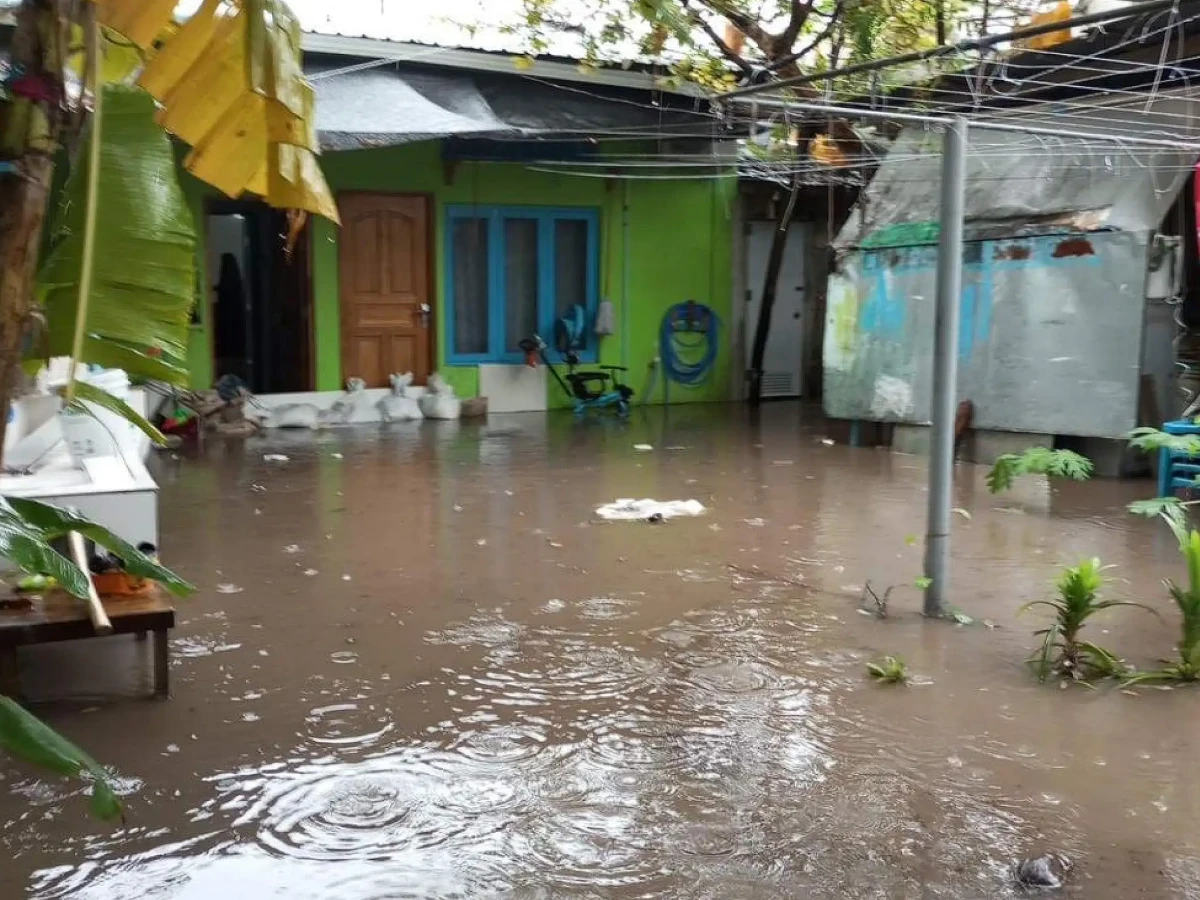
Flooding in N. Henbadhoo, 2024 | Photo: NDMA
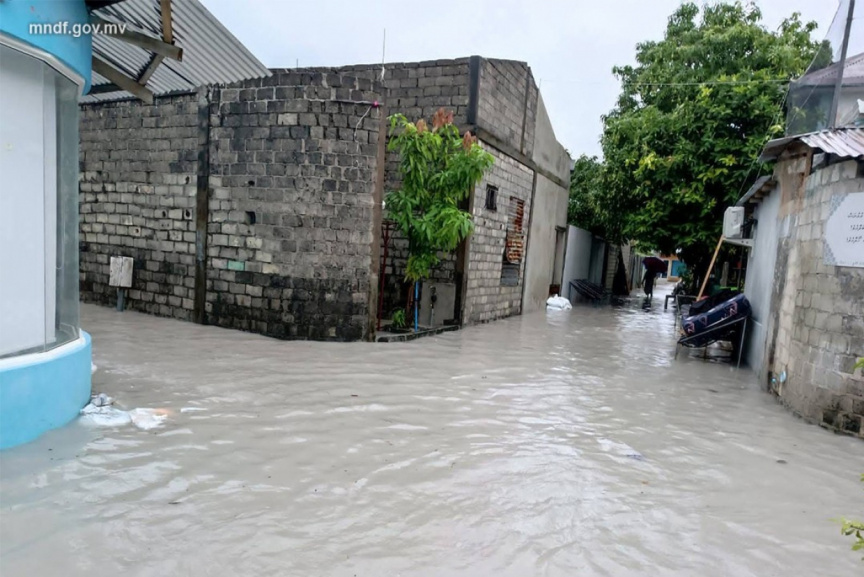
Flooding in K. Guraidhoo, 2024 | Photo: Sunonline
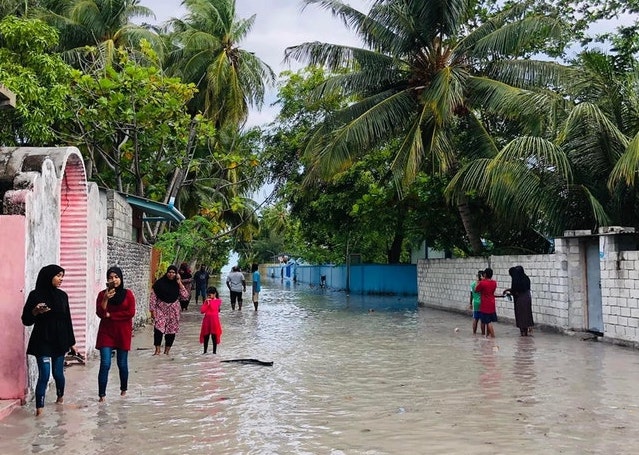
Flooding in Th. Kinbidhoo, 2022 | Photo: Times of Addu
Practical preparedness actions to reduce flood impacts
Taking early action can significantly reduce damage when heavy rain is forecast or ongoing—especially where flooding is common.
Reducing Risk Through Early Action and Awareness
Heavy rainfall in the Maldives is commonly linked to active monsoon conditions and shifting weather patterns, passing rain clouds and thunderstorm systems, and tropical disturbances that enhance rainfall even without cyclone formation. These systems can develop quickly and bring intense rain over short periods, increasing the likelihood of flooding across islands.
Heavy rainfall rarely occurs in isolation and often interacts with other hazards, compounding risk and impact. Intense rainfall can lead to surface water flooding, causing roads and low-lying areas to flood, while heavy rain combined with high tides can worsen coastal flooding. These conditions are often accompanied by thunderstorms and lightning, as well as strong winds or squalls, increasing safety risks, disrupting transport, and placing additional strain on communities.
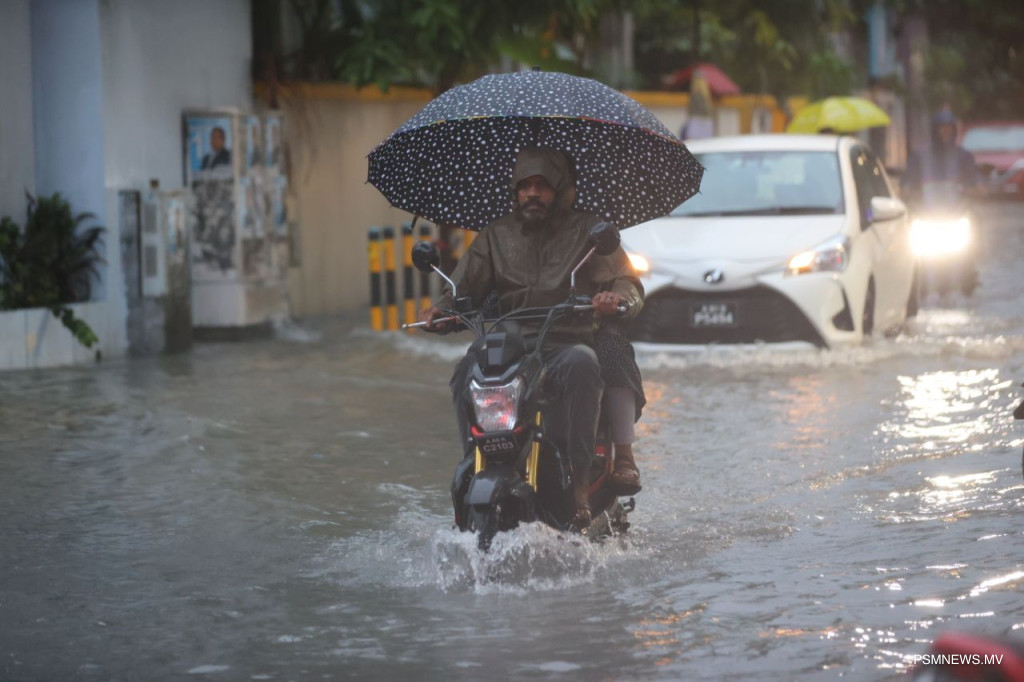
Because the Maldives is low-lying and has limited natural drainage, even short periods of intense rainfall can overwhelm drainage systems and disrupt daily life. Monitoring weather alerts, taking early household and community actions, and avoiding floodwaters are practical steps that help reduce damage and protect health and safety. Timely reporting of impacts also support faster response and recovery when heavy rainfall leads to flooding.