Pandemics are a serious health and economic risk for the Maldives. Learn what makes the country uniquely vulnerable and what every person can do to help protect their community when disease spreads.
What is a Pandemic?
A pandemic is the spread of a disease across regions or worldwide. It occurs when a new virus emerges, spreads efficiently from person to person, and causes significant human illness at a scale for which most people have no existing immunity. Diseases of pandemic potential have historically presented as contagious respiratory illnesses. Viruses that have caused past pandemics typically originated in animals and most recently, in coronaviruses.
The likelihood of any single pandemic is rare. But the global conditions that allow pandemics to emerge and spread include - urbanization, international travel, global commerce, and human contact with animal habitats. Research published in the Proceedings of the National Academy of Sciences estimates the return period for a pandemic of similar or greater intensity to COVID-19 at approximately 209 years - a rare event, but not an impossible one.
Why the Maldives is Uniquely Exposed
The Maldives is among the most internationally connected small nations on Earth. Velana International Airport handles millions of arrivals each year. Tourists and workers from across the world move through our resorts, our harbours, and our capital. That connectivity is the engine of our economy and it is also the primary pathway through which a new pathogen could arrive.
Once a disease enters the Maldives, the geography shapes how it spreads and how hard it is to contain. The Greater Malé Region concentrates a third of the national population in one of the most densely settled urban areas in the world. The proximity of the capital to Velana International Airport and the Malé Commercial Harbour means that pathogens arriving through international gateways reach densely populated areas almost immediately.
Outside Malé, the challenge is different but equally serious. The tiered referral health system means that patients with serious illness must be evacuated by sea or air to higher-level facilities. During a widespread outbreak, that evacuation capacity can be overwhelmed quickly. Remote island communities face the additional burden of limited local health infrastructure and reliance on supply chains that may themselves be disrupted during a global health emergency.
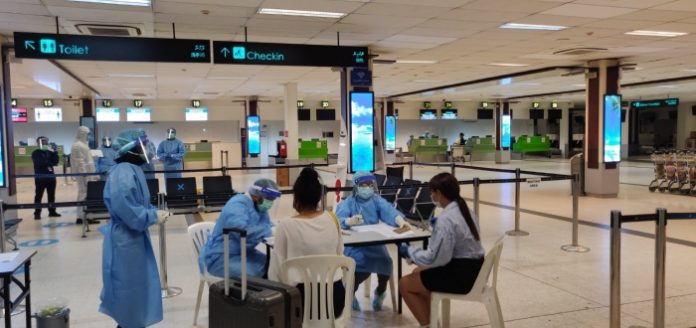
COVID-19 made all of this visible. Despite an early declaration of a State of Public Health Emergency and rapid border closures following the WHO global alert, community transmission became widespread. The Maldives recorded over 185,000 confirmed cases and 311 deaths. GDP contracted by 33.5 percent one of the sharpest economic contractions in the country's history. More than 20,000 workers in the tourism sector lost employment or were placed on no pay.
Velana International during COVID-19 outbreak | Photo: Maldives Times
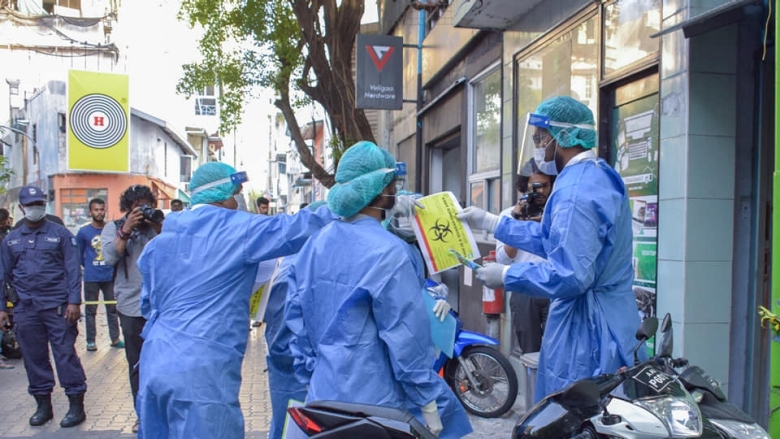
Impacts of a Pandemic
Photo: Ministry of Health
How You Can Help Protect Your Community
Pandemic preparedness is not only a government responsibility. Individual actions during normal times and during outbreaks make a direct difference to how fast disease spreads and how well communities cope.
✓
Practice Good Hygiene Every Day Handwashing with soap and water particularly before eating and after contact with public surfaces remains one of the simplest and most effective ways to reduce transmission of infectious diseases. Good hygiene is not only for pandemic conditions. It is everyday protection.
✓
Stay Home When You Are Unwell If you are sick, stay home. Do not travel between islands. Avoid contact with vulnerable people such as elderly, infants, and those with underlying health conditions. Early isolation of illness is one of the most powerful tools communities have to slow the spread of disease.
Follow Official Health Guidance During a health emergency, follow the guidance issued by the Health Protection Agency and the Ministry of Health. Avoid spreading unverified information. Reliable guidance saves lives.
Know Your Island's Health Contacts Know the location of your nearest health centre, how to access medical evacuation, and how to contact the Health Protection Agency in an emergency. Having this information before you need it is what makes the difference when time is critical.
Keep Your Vaccinations Up to Date Vaccination is the most effective tool available to reduce the severity and spread of infectious diseases. Keep yourself and your family up to date on recommended vaccines. Vaccination protects you and reduces the burden on health services for everyone.
Maintain Basic Household Preparedness Keep a modest stock of essential medications, oral rehydration salts, and basic supplies at home. During a widespread outbreak, access to shops and pharmacies may be disrupted. Basic preparedness reduces dependence on systems that may be under strain.
✓
Support Your Community Check in on elderly neighbors, people living alone, and families with young children during periods of health emergency. Communities that support each other recover faster. Volunteering with response efforts, contact tracing, community communication, distribution support makes a real difference.
Pandemics are rare. But they are not impossible. And when they come, the communities that have prepared, that know what to do, that trust their health systems, and that look out for each other — are the ones that come through.
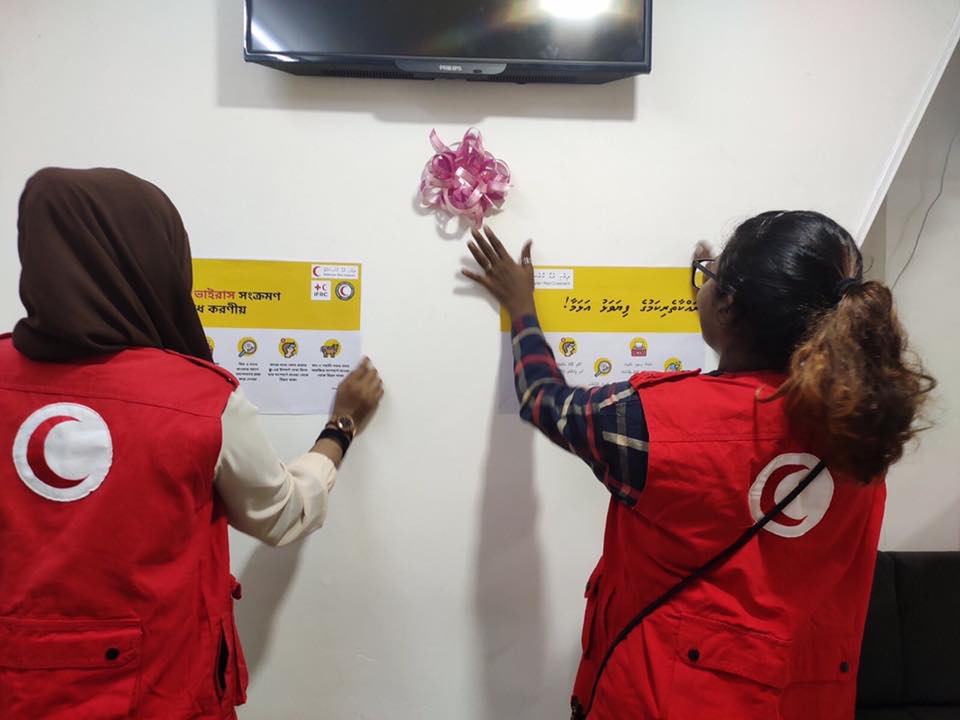
Maldivian Red Crescent volunteers dissemination risk information | Photo: MRC
Learn More
The Maldives has strengthened its pandemic preparedness significantly since COVID-19. The Health Emergency Operations Plan provides the national roadmap for response mechanisms and responsibilities across public health emergencies. The Public Health Emergency Act and the International Health Regulations framework together provide the legal basis for a rapid, coordinated national response when the next health emergency arrives.
Ministry of Health, Family & Welfare & Health Protection Agency